jueves, 25 de abril de 2013

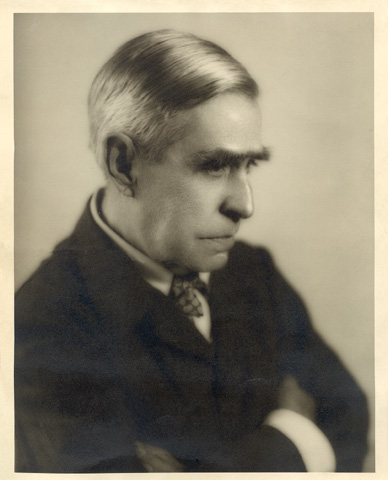
Lewis Carroll


SUEÑO DEL REY

-Ahora está soñando. ¿Con quién sueña? ¿Lo sabes?
-Nadie lo sabe.
-Sueña contigo. Y si dejara de soñar, ¿qué sería de ti?
-No lo sé.
-Desaparecerías. Eres una figura de su sueño. Si se despertara ese Rey te apagarías como una vela.
FIN

KING´S DREAM

-Now he is dreaming. Who dreams? Do you know?
'Nobody knows.
-Dreams about you. And if you stop dreaming, what would you be?
I do not know.
-Poof and disappear. Already a figure of your dream. If you woke up this King you would turn off like a candle.
END


Translation: Isabel Alvarez


Chang Tzu


Sueño de la mariposa

Chuang Tzu

Chuang Tzu soñó que era una mariposa. Al despertar ignoraba si era Tzu que había soñado que era una mariposa o si era una mariposa y estaba soñando que era Tzu.

FIN


Butterfly Dream

Chuang Tzu

Chuang Tzu dreamed he was a butterfly. Waking know whether it was Tzu who had dreamed he was a butterfly or was a butterfly and was dreaming that he was Tzu.

END


                                         Trasnslation: Isabel Alvarez

martes, 9 de abril de 2013

CURRENT DISCUSSION: How to Teach Literature to College Students?


DISCUSSION
Topic: How to Teach Literature to College Students?

I believe the literature is a tool where students can enjoys the reading in class, and so as in the study of algebra and calculus, the study of literature builds thinking skills, offers students the opportunity to discover, think, evaluate, and analyze the world around them in broader. Furthermore, it allows us to develop better a composition when we write. However, teaching literature not only improves reading fluency through the expansion of vocabulary, but also increases students' reading comprehension skills. So, it’s essential to students.


      According to the points or steps that is shown in the lecture about How to Teach Literature to College Students are very important because help us how we should teach literature of the best way.

Keny Baruch García


I strongly believe that is very important to learn literature because the study of literature allows people to develop new ideas and ethical standpoints, and can help people to stand as educated members of society. Studying literature can be something enriching and revealing.

English literature allows us to understand the philosophical movements and ideas that permeated to a particular culture at a particular time. For example, "Frankenstein", by Mary Shelley, shows the ambivalence felt about the British empiricism.

English literature gives us a new way of thinking about the world. For example, Mary Wollstonecraft introduces the idea that women should not have a servile attitude toward men, giving rise to the modern feminist theory.

In conlusion literature is an art form that helps us express: knowledge and feelings of every human being with the help of philosophy, since I gather that philosophy is not learned but simply we think philosophically.


Erika Sibaja Garcia

Mini Tales


El dedo
Feng Meng-lung

Un hombre pobre se encontró en su camino a un antiguo amigo. Éste tenía un poder sobrenatural que le permitía hacer milagros. Como el hombre pobre se quejara de las dificultades de su vida, su amigo tocó con el dedo un ladrillo que de inmediato se convirtió en oro. Se lo ofreció al pobre, pero éste se lamentó de que eso era muy poco. El amigo tocó un león de piedra que se convirtió en un león de oro macizo y lo agregó al ladrillo de oro. El amigo insistió en que ambos regalos eran poca cosa.

-¿Qué más deseas, pues? -le preguntó sorprendido el hacedor de prodigios.

-¡Quisiera tu dedo! -contestó el otro.
FIN


The finger
Feng Meng-Lung

A poor man found on his way to an old friend. This had a supernatural power that allowed him to perform miracles. As the poor man complained of the difficulties of his life, his friend touched with the finger a brick immediately became gold. He offered it to the poor, but he complained that it was too little. The friend touched a stone lion which became a solid gold lion and added it to the gold brick. The friend insisted that both gifts were little.

- What else do you want then? _He asked surprised doing wonders.

- I want your finger! Replied the other.

End

Translation by Keny Baruch Garcia


El dinosaurio
Augusto Monterroso

Cuando despertó, el dinosaurio todavía estaba allí.


The Dinosaur
Augusto Monterroso

When he woke up, the dinosaur was still there.


Translation by Erika Sibaja


El Eclipse
Augusto "Tito" Monterroso

Cuando fray Bartolomé Arrazola se sintió perdido aceptó que ya nada podría salvarlo. La selva poderosa de Guatemala lo había apresado, implacable y definitiva. Ante su ignorancia topográfica se sentó con tranquilidad a esperar la muerte. Quiso morir allí, sin ninguna esperanza, aislado, con el pensamiento fijo en la España distante, particularmente en el convento de los Abrojos, donde Carlos Quinto condescendiera una vez a bajar de su eminencia para decirle que confiaba en el celo religioso de su labor redentora.

Al despertar se encontró rodeado por un grupo de indígenas de rostro impasible que se disponían a sacrificarlo ante un altar, un altar que a Bartolomé le pareció como el lecho en que descansaría, al fin, de sus temores, de su destino, de sí mismo.

Tres años en el país le habían conferido un mediano dominio de las lenguas nativas. Intentó algo. Dijo algunas palabras que fueron comprendidas.

Entonces floreció en él una idea que tuvo por digna de su talento y de su cultura universal y de su arduo conocimiento de Aristóteles. Recordó que para ese día se esperaba un eclipse total de sol. Y dispuso, en lo más íntimo, valerse de aquel conocimiento para engañar a sus opresores y salvar la vida.

-Si me matáis -les dijo- puedo hacer que el sol se oscurezca en su altura.

Los indígenas lo miraron fijamente y Bartolomé sorprendió la incredulidad en sus ojos. Vio que se produjo un pequeño consejo, y esperó confiado, no sin cierto desdén.

Dos horas después el corazón de fray Bartolomé Arrazola chorreaba su sangre vehemente sobre la piedra de los sacrificios (brillante bajo la opaca luz de un sol eclipsado), mientras uno de los indígenas recitaba sin ninguna inflexión de voz, sin prisa, una por una, las infinitas fechas en que se producirían eclipses solares y lunares, que los astrónomos de la comunidad maya habían previsto y anotado en sus códices sin la valiosa ayuda de Aristóteles.

FIN


The Eclipse
Augusto “Tito” Monterroso

When Fray Bartolome Arrazola felt lost accepted that nothing could save him. The mighty jungle of Guatemala had taken him, implacable and definitive. 

Given their topographic ignorance, he sat quietly waiting to die. He wanted to die there, without any hope, isolated, with thoughts fixed on the distant Spain, particularly in the Monastery of Abrojos, where Carlos V once time condescended to lose his eminence to say him that he has confidence in his religious zeal of his redemptive work.

When he awoke, he found himself surrounded by a group of indigenous, with impassive face, preparing to sacrifice him on a sacrificial stone, an altar which to Bartolome seemed like the bed where he would rest, at last, of his fears, of his destiny.

Three years in the country had given him moderate native language proficiency. He tried something. He said some words that were understood.

Then blossomed into him an idea of which was worthy of his talent and culture and their hard universal knowledge of Aristotle. He remembered that one of these days was expected a total solar eclipse. And arranges, in the most intimate, make use of that knowledge in order to deceive his oppressors and lifesaving.
-If you kill me, he said to them, I can make the sun go dark at its height.

Natives stared him, and Bartolome surprised disbelief in their eyes. He saw that there was a small council, and he waited confident, not without some disdain.

Two hours after the heart of Fray Bartolome Arrazola dripping its vehement blood on the Stone of Sacrifice (bright under the dim light of an eclipsed sun), while one of the natives recited, without inflection, slowly, one by one, the endless dates in what would occur solar and lunar eclipses, that the astronomers of the Maya community had anticipated and noted down in their codices, without the valuable help of Aristotle.


Translation by Erika Sibaja

Chinese Ideograms

By Keny Baruch


By Marco Antonio


lunes, 1 de abril de 2013

Haikus of Jose Juan Tablada


HOJAS SECAS
El jardín esta lleno de hojas secas;
Nunca vi tantas hojas en sus árboles
Verdes, en primavera.

DRY LEAVES
The garden was full of dry leaves;
I never saw so many leafs in their trees
Green  in Spring.

EL CABALLO DEL DIABLO
Caballo del diablo
Clavo de vidrio
Con alas de talco


THE HORSE OF THE DEVIL
Horse of the devil:
Nail of glass
With wings of  powder.

MARIPOSA NOCTURNA
Devuelve a la desnuda rama
Nocturna mariposa,
Las hojas secas de tus alas.

NOCTURNAL BUTTERFLY 
Give back to the branch naked
Nocturnal butterfly,
The dry leafs of your wings.


HOTEL
Otoño en el hotel de primavera;
En el patio de “tenis”
Hay musgo y hojas secas.

HOTEL
Autumn in the hotel of spring;
In the yard of “tennis”
There are mosses and dry leafs.


LUCIÉRNAGAS
Luciérnagas en un árbol
¿Navidad en verano?

GLOW-WORM
Glow-worm in a tree.
Christmas  in  summer?


                        Version in English:    Arly Fuentes Azcorra  


Prólogo

Arte, con tu áureo alfiler 
Las mariposas del instante 
Quise clavar en el papel; 
En breve verso hacer lucir, 
Como en la gota de rocío, 
Todas las rosas del jardín; 
A la planta y el árbol 
Guardar en estas páginas 
Como las flores del herbario. 
Taumaturgo grano de almizcle 
Que en el teatro de tu aroma 
El pasado de amor revives, 
Parvo caracol del mar, 
Invisible sobre la playa 
Y sonoro de inmensidad! 


Prologue


Art with a aurous pin
Instant butterflies
I wanted to stick in the paper;

In short verse make you look,
As in the dewdrop,
All garden roses;

A plant and the tree
Save in these pages
As herbal flowers.

Caster bean musk
In the theater of your scent
The past of love revives,

Parvum sea snail,
Invisible on the beach
And sonic vastness!


Epílogo 
 !Ah del barquero!


Epilogue

Ah, the boatman!


   English translation:  Eyri Polanco


viernes, 1 de marzo de 2013

The Literary Canon


     The literary canon is a tool to size art and culture in our society.  It is a model that we need to follow when we want introduces ourselves in a particular branch of art and culture.

  In literature, the canon is a brief but very selective list of classic works that even in the time we are living, are still read with a very powerful interested. This list are maintaining without variations, generation after generation. The reason of the list is not complex at all; this literary works, have been chosen because of their social prestigious and are considered as an essential element of education in the youth. 

When someone teaches literature is pretty impossible not establish a canon. The canon should have a very extensive repertoire of classic works and authors that join two factors at the same time: the aesthetic interest and the pedagogical necessity. When we talk about aesthetic interest we really need to be careful to choose works of quality, which ones are the major works that might like students. And when we refer to the pedagogical necessity, we are talking about which ones worth show and be analyzed by students. Certainly, it must stimulate the mind of students and transmit them the passion for literary lecture. 

The canon is necessary in any aspect. Every culture, every epoch has a list of reference.
“The cannon should be a canon of desire, as Borges proposed, where the process of canonization, for a very curious reader, should never end and be re-form a thousand times”. María del Carmen Castañeda

Written by Angelica Carrillo


_________________________________________________________________________________

It is a term used widely to refer a group of literary works that are considered the most important of a particular time period or place. Therefore, to teach literature it is inevitable to ensure a canon, a closed repertoire of works and authors in which you combine two factors: the aesthetic taste and the pedagogical need.


The central idea in the concept of literary canon arises from a double need: continually review the list of recommended reading in class and an awareness of the need to affirm the importance of this list because it must serve to promote the study of literature and to facilitate your personal enjoyment, whether in school or outside of it.

By: Arly Georgina Fuentes 

_________________________________________________________________________________

The term "canon", of Greek origin, refers to the concept of "rod or standard." Within the literary system, the concept of canon underlines the existence of a model or ideal ratio when considering literary works. That amount, called the literary canon is, in broad terms, the total written and oral work that still remains. However, this potential is limited canon from the outset about the possibility of access or no access to certain works. So we can say that any fee is just one part of a whole literary chimerical.

By: Ana Olivia

_________________________________________________________________________________


The term "canon", of Greek origin, refers to the concept of "rod or standard." Within the literary system, the concept of canon underlines the existence of a model or ideal ratio when considering literary works. That amount, called the literary canon is, in broad terms, the total written and oral work that still remains. However, this potential is limited canon from the outset about the possibility of access or no access to certain works. So we can say that any fee is just one part of a whole literary chimerical.

By: Daniel Perez